Introduction
When your mining conveyor, packaging line, or aerospace gearbox demands a worm helical gear assembly built for extreme loads in a compact footprint, the supplier you choose becomes mission-critical. Worm helical gears deliver the high reduction ratios of worm drives alongside the efficiency of helical gearing — yet finding a wholesale supplier with AGMA-rated precision, consistent lead times, and custom-order flexibility is increasingly difficult.
The wrong choice carries steep consequences. Emergency gearbox replacements average $180,000, and unplanned downtime in high-throughput operations can exceed $100,000 per hour. Many buyers discover too late that their supplier outsources grinding, lacks reverse engineering capabilities, or can't maintain dimensional consistency across batch orders. The result: rejected OEM assemblies, production delays, and equipment failures.
The broader industrial gearbox market grows at 4.8% annually, but the helical-worm gear segment is surging at 10.6% CAGR, driven by automation and robotics demand. That growth is straining supplier capacity and pushing lead times out. This guide breaks down what separates reliable wholesale partners from risky ones — and which suppliers consistently deliver at scale.
Key Takeaways
- Worm helical assemblies deliver high reduction ratios (100:1 to 3600:1) in compact configurations by combining worm and helical stages
- Prioritize suppliers with AGMA quality ratings matched to your load/speed requirements, in-house grinding, and proven batch consistency
- Suppliers range from catalog distributors to precision job shops with reverse engineering for obsolete parts
- Evaluate MOQ flexibility, material options (alloy steel, stainless, bronze), and custom versus standard capability
- Carnes-Miller Gear delivers AGMA 10-13 rated custom solutions with 50+ years of experience, grinding up to 400mm, and reverse engineering support
Overview of Worm Helical Gears in Industrial Applications
Defining the Helical-Worm Advantage
A worm helical gear assembly integrates two distinct power transmission mechanisms into a multi-stage reducer. The worm stage uses a threaded screw (worm) meshing with a gear wheel to achieve high reduction ratios—typically 10:1 to 60:1 in a single stage.
Adding a helical gear stage (which uses angled teeth for rolling contact) increases overall efficiency while reducing the offset between input and output shafts.
This combination delivers three critical advantages over straight spur or bevel systems:
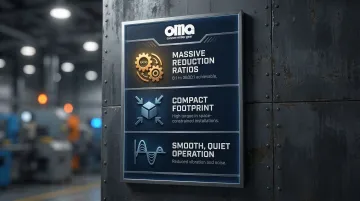
- Massive reduction ratios: Double-reduction helical-worm units achieve 8:1 to 900:1, with specialized integrated units reaching 3600:1
- Compact footprint: The multi-stage design packages high torque multiplication into space-constrained installations
- Smooth, quiet operation: The multi-stage design smooths out torque impulses, reducing both vibration and noise in operation
Primary Industrial Applications
Because of their high transfer capacity in minimal space, helical-worm assemblies dominate heavy-duty applications:
- Material handling: Conveyors, bucket elevators, sludge scrapers
- Industrial automation: Packaging machinery, automated warehouses, robotic systems
- Mining equipment: Crusher drives, haulage systems
- Agricultural machinery: Feed conveyors, grain handling
- Transportation: Rail equipment, vehicle transmissions
Why Supplier Selection Matters
Wholesale buyers sourcing worm helical gears face real consequences when suppliers cut corners—dimensional variance across batch orders, inconsistent heat treatment, and delivery delays that stall production lines. The suppliers evaluated in this guide were assessed on four criteria: manufacturing precision against AGMA quality standards, depth of in-house capabilities versus outsourced production, wholesale order flexibility, and demonstrated performance across the industrial sectors listed above.
Top Wholesale Worm Helical Gear Suppliers
The suppliers below were evaluated on manufacturing precision, AGMA quality standards, wholesale capacity, customization capabilities, and cross-industry experience. Pricing varies by specification and order volume—request quotes directly for your requirements.
Carnes-Miller Gear (CMG)
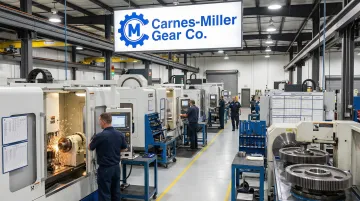
Founded in 1973 and operating from an 18,000-square-foot facility in Locust, NC, Carnes-Miller Gear is a full-service precision gear job shop with over 50 years of manufacturing experience serving aerospace, defense, mining, industrial, medical, and OEM sectors.
CMG offers end-to-end in-house capabilities: gear blanking, milling, grinding, hobbing, and broaching, with AGMA 10 ratings on shaped/hobbed gears and AGMA 13 on ground spur gears. Gear grinding extends to 400mm diameter.
Reverse engineering services make CMG a reliable source for obsolete or custom worm helical gear requirements. In-house nital-etch testing detects grinding burns and validates heat-treated components.
| Attribute | Details |
|---|---|
| Key Capabilities | Gear blanking, milling, grinding (up to 400mm), hobbing, broaching, reverse engineering, nital-etch testing |
| AGMA Quality Rating | AGMA 10 (shaped/hobbed), AGMA 13 (ground spur and heat-treated gears) |
| Industries Served | Aerospace, defense, medical, mining, industrial, transportation, construction, agricultural, rail |
Boston Gear (Altra Industrial Motion / Regal Rexnord)
Boston Gear, now a wholly owned subsidiary of Regal Rexnord following the March 2023 acquisition of Altra Industrial Motion, is one of the largest cataloged enclosed gear drive suppliers in North America, with over 30,000 standard products. The company's Charlotte, NC manufacturing facility holds ISO 9001:2015 certification (valid through February 2028).
Key product lines for wholesale buyers include the 700 Series single and double reduction worm gear reducers (recently updated to the SS700 Gen2 with IP69K-rated stainless steel for washdown environments), the 800BR Series right-angle helical-worm drives offering ratios from 8:1 to 900:1, and the HM Series double C-faced helical multipliers. The SS700 Gen2 carries NSF certification for food safety applications.
| Attribute | Details |
|---|---|
| Key Capabilities | 700 Series worm reducers, 800BR helical-worm drives (8:1 to 900:1), HM Series helical multipliers, IP69K washdown models |
| AGMA / Quality Standards | ISO 9001:2015 certified, NSF food safety certification (SS700 Gen2) |
| Industries Served | Material handling, food and beverage, packaging, aerospace, medical mobility |
Regal Rexnord
Following the 2023 Altra acquisition, Regal Rexnord operates 143 facilities including 50 principal manufacturing plants and 26 warehouse facilities. Multiple locations hold ISO 9001:2015 certifications. The company's Industrial Powertrain Solutions segment combines legacy Regal brands with Altra's portfolio into one of the broadest power transmission portfolios in the industry.
Relevant product lines span multiple brand tiers:
- Falk heavy-duty CT-Series gearboxes
- Rexnord Planetgear and Quadrive precision drives (three-year warranties)
- Grove Gear EL Series aluminum double-reduction helical-worm reducers
- Delroyd custom-engineered worm gear drives
- Hub City Poweratio 2000 helical-worm units and Spartan aluminum worm drives
| Attribute | Details |
|---|---|
| Key Capabilities | Multi-brand portfolio (Falk, Rexnord, Grove Gear, Delroyd, Hub City), custom engineering, global distribution network |
| Quality Standards | ISO 9001:2015 (multiple facilities), three-year warranties on select product lines |
| Industries Served | Metals, mining, energy, unit material handling, water/wastewater, heavy industrial |
Bison Gear & Engineering
Bison Gear & Engineering, which combined with AMETEK Dynamic Fluid Solutions in 2023 to form "Bison, a business of AMETEK," brings over 60 years of U.S.-based manufacturing experience. The company operates ISO 9001:2015-certified facilities in St. Charles, Illinois, and Whitsett, North Carolina, both ISO 9001:2015 certified.
Bison manufactures over 700 standard gearmotors and emphasizes custom OEM solutions through its "Robusticity" design philosophy and lean manufacturing environment. Short-run and unique components are accommodated with rapid response times.
Product lines include the IHP-Q Series aluminum shell right-angle worm gear reducers (1/4 to 5 HP), IHP-S Series IP69K-rated stainless steel reducers for washdown applications, and PowerSTAR Series right-angle hypoid gearmotors.
| Attribute | Details |
|---|---|
| Key Capabilities | 700+ standard gearmotors, custom OEM solutions, fractional to integral HP range, IP69K washdown models |
| Quality / Certifications | ISO 9001:2015 certified (both facilities) |
| Industries Served | Food and beverage, agriculture, packaging equipment, transportation, industrial machinery |
Tsubaki (U.S. Tsubaki Power Transmission)
U.S. Tsubaki Power Transmission, a subsidiary of the global Tsubakimoto Chain Group, operates significant North American plants in Chicopee, Massachusetts, and Portland, Tennessee. The company holds ISO 9001:2015 certification (valid through December 2025) and ISO 14001 environmental certifications.
For worm-helical applications, Tsubaki's TERUS Series (EWGM/SWGM/TDGM) integrates a worm reducer with a gear motor in an orthogonal, double-reduction drive with ratios from 100:1 to 3600:1. The Troi Drive and Worm Power Drive complement this lineup using troidal (drum-shaped) and cylindrical worm gears respectively.
These products are well-suited for conveyors, bucket elevators, and theatrical equipment where quiet, consistent operation is a hard requirement.
| Attribute | Details |
|---|---|
| Key Capabilities | TERUS Series integrated helical-worm motors (100:1 to 3600:1), Troi Drive troidal worm gears, high-capacity reducers |
| Quality / Standards | ISO 9001:2015, ISO 14001 environmental certification |
| Industries Served | Conveyors, material handling, bucket elevators, theatrical/stage equipment, industrial automation |
How We Chose the Best Wholesale Worm Helical Gear Suppliers
Total Cost of Ownership vs. Initial Price
Buyers who evaluate suppliers solely on quoted price often face severe operational consequences. Industry data shows 62% of gearboxes fail between scheduled inspections, with emergency replacements averaging $180,000 and unplanned downtime exceeding $100,000 per hour in high-throughput operations. In one documented case, early fault detection prevented over $165,000 in downtime and repair costs.
Our evaluation methodology prioritized:
- Manufacturing precision: AGMA quality ratings appropriate for application load and speed
- In-house capabilities: Grinding, hobbing, and finishing performed internally versus outsourced (directly affects dimensional accuracy and batch consistency)
- Wholesale flexibility: MOQ requirements and lead time predictability
- Certifications: ISO 9001, AGMA standards, industry-specific credentials
- Custom capabilities: Reverse engineering for obsolete parts, engineered-to-order assemblies
Critical Selection Factors
AGMA Quality Rating
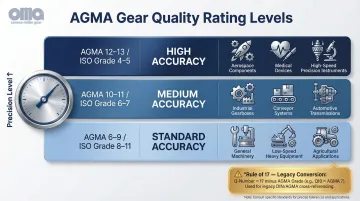
The industry has transitioned from legacy AGMA 2000-A88 (Q-numbers) to ANSI/AGMA ISO 1328-1 where numbering is reversed — lower numbers indicate higher precision. Use the "Rule of 17" for translation: subtract the legacy Q-number from 17 to get the approximate ISO class.
- AGMA 12-13 (ISO 4-5): High accuracy for aerospace, medical devices, high-speed precision applications
- AGMA 10-11 (ISO 6-7): Medium accuracy for standard industrial gearboxes, conveyors, automotive
- AGMA 6-9 (ISO 8-11): Low accuracy for general machinery, low-speed heavy equipment
Material Selection
Worm gears suffer from high sliding friction, making material pairing critical. Standard practice requires surface-hardened steel worms (case-hardened to Rc 58-60) paired with bronze wheels (CuSn12 or CuSn12Ni2), offering a friction coefficient of 0.05–0.10. The softer bronze acts as a sacrificial wear element, protecting the steel worm from premature failure. For continuous-duty applications, reject cheaper cast-iron or inferior alloy substitutes.
In-House Grinding vs. Outsourced
Suppliers with in-house grinding maintain tighter tolerances and more predictable delivery windows than those relying on subcontractors. Grinding also salvages gears with heat treat distortion and achieves the surface finish required for AGMA 13 ratings.
Reverse Engineering Capabilities
This matters most for OEMs needing non-standard ratios, obsolete replacement parts, or assemblies with unique dimensional requirements. Confirm whether this service is performed in-house before assuming capability — outsourced reverse engineering introduces both accuracy risk and lead time uncertainty.
Buyer Due Diligence Checklist
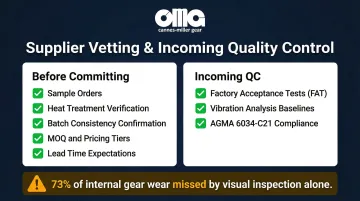
Before committing to a wholesale relationship:
- Request sample orders or inspection reports
- Verify heat treatment and nital-etch testing availability
- Confirm whether the supplier can maintain consistency across batch orders
- Clarify MOQ and per-unit pricing tiers upfront
- Establish lead time expectations for standard versus custom orders
That checklist covers supplier vetting — but incoming quality control is equally important. Routine visual inspections miss 73% of internal gear wear, so mandate Factory Acceptance Tests (FAT), vibration analysis baselines, and adherence to AGMA 6034-C21 (governing wear and strength rating of worm gear reducers) to catch problems before they reach your production line.
Conclusion
Sourcing wholesale worm helical gears requires going beyond price lists. The right supplier must align with your application's precision requirements, delivery schedules, and volume needs—whether you're an OEM building new equipment or sourcing aftermarket replacements. Unplanned downtime from a failed gearbox will cost far more than any savings from choosing a cheaper supplier upfront.
Before committing to a wholesale relationship, evaluate each supplier against the criteria that matter most for long-term reliability:
- In-house grinding and finishing capabilities (not outsourced)
- AGMA quality ratings relevant to your application
- Reverse engineering capacity for obsolete or legacy equipment
- Proven track record in your specific industry
- Demonstrated dimensional consistency across repeat orders
Scalability matters more than one-off cost savings. A supplier who delivers acceptable parts initially but can't maintain tolerances across production runs creates downstream problems that compound over time.
Carnes-Miller Gear, with over 50 years of precision gear manufacturing experience, AGMA-rated quality, and in-house gear blanking, hobbing, shaping, and grinding up to 400mm diameter, serves aerospace, defense, medical, mining, and industrial sectors. For a consultation or quote on your wholesale gear requirements, contact CMG at 704-888-4448 or dan@cmgear.us.
Frequently Asked Questions
What is the difference between a worm gear and a helical gear?
A worm gear uses a threaded screw (worm) meshing with a gear wheel to achieve high reduction ratios (typically 10:1 to 60:1) in a compact space through sliding contact. A helical gear uses angled teeth for rolling contact, delivering smoother, quieter operation and higher efficiency. Worm helical gear assemblies combine both principles in multi-stage reducers, achieving massive reduction ratios (100:1 to 3600:1) with improved efficiency and compact footprints.
What AGMA quality rating should I look for in a wholesale gear supplier?
For standard industrial conveyors and material handling, target AGMA 10-11 (ISO 6-7). High-speed, high-load, or low-noise applications in aerospace, defense, or precision machinery require AGMA 12-13 (ISO 4-5). Specifying unnecessarily high ratings increases costs without functional benefit.
What materials are commonly used in worm helical gear manufacturing?
Worm shafts use surface-hardened steel (case-hardened to Rc 58-60); worm wheels use bronze (CuSn12 or CuSn12Ni2) or brass for low friction (coefficient 0.05-0.10) and scuffing resistance. Helical gear stages call for alloy steel in high-strength applications, stainless steel in corrosive environments, or cast iron in heavy industrial drives.
Can wholesale gear suppliers provide custom or reverse-engineered gears?
Many full-service gear manufacturers offer custom and reverse-engineered solutions—critical for OEMs needing non-standard ratios, obsolete replacement parts, or assemblies with unique dimensional requirements. However, this capability requires in-house engineering, inspection equipment, and flexible manufacturing processes. Confirm whether the supplier performs reverse engineering in-house or subcontracts it, and request examples of similar projects before committing.
What is a typical MOQ (minimum order quantity) for wholesale worm helical gears?
MOQ varies significantly by supplier type. Large catalog distributors may offer lower MOQs (sometimes single units) on standard products with longer lead times. Precision job shops typically require minimum runs depending on setup and tooling costs—often 5-25 pieces for custom gears, though some accept prototype quantities. Clarify MOQ, per-unit pricing tiers, setup charges, and tooling costs upfront when requesting quotes to understand the full cost picture.
How long does lead time typically take for wholesale gear orders?
Standard catalog items typically ship in 2-6 weeks; custom or engineered-to-order gears run 6-16 weeks depending on complexity, material sourcing, and heat treatment. Suppliers with full in-house capabilities—blanking, hobbing, grinding, and finishing—generally provide more predictable delivery than those relying on subcontractors. Ask about expedited options upfront if lead time is a constraint.