OEM gear manufacturing, in the industrial sense, means custom-fabricated gears produced to a buyer's exact specifications, built to integrate seamlessly into a larger finished product. The gear manufacturer doesn't sell standalone products to consumers—it supplies precision components that become part of someone else's machine.
This article covers the core manufacturing processes behind precision OEM gears, the quality standards that separate acceptable from exceptional, the industries that depend on purpose-built gears, and what to evaluate when selecting a supplier.
Key Takeaways
- OEM gear manufacturing produces custom, specification-driven gears built to integrate into a buyer's finished product—not sold as standalone items.
- Core processes—hobbing, shaping, grinding, and broaching—each address different gear geometries and tolerance requirements.
- AGMA quality ratings are the industry benchmark for precision; higher ratings demand tighter tolerances.
- Aerospace, defense, medical, mining, and rail applications require purpose-built gears that off-the-shelf parts cannot replace.
- Suppliers with full in-house capabilities—including grinding, reverse engineering, and nital-etch testing—deliver tighter quality control and faster turnaround.
What Is OEM Gear Manufacturing?
OEM stands for Original Equipment Manufacturer. In the gear manufacturing context, it refers to a company that fabricates gears to a buyer's exact design specifications—those gears then become integrated components inside the buyer's finished product.
The supply chain relationship works like this: the gear manufacturer is the OEM supplier. The purchasing company—say, a mining equipment builder or aerospace integrator—assembles those gears into their product and delivers it to end users. The gear never reaches a consumer shelf on its own.
OEM vs. Aftermarket vs. ODM
These three categories are distinct, and confusing them creates procurement problems:
- OEM gears are engineered to the original design spec—exact geometry, tolerances, and material for a specific assembly.
- Aftermarket gears are made for replacement and may not match the same tolerances. They're not necessarily inferior, but they're not purpose-built for a specific fit.
- ODM (Original Design Manufacturer) means the manufacturer owns the design and the buyer rebrands it. Less common in precision industrial gear work, where IP ownership and fit-criticality make buyer-owned designs the standard.
Why Precision Matters Here
Gears transmit torque. A gear that's even marginally out of spec creates noise, heat, accelerated wear, and ultimately, system failure. In high-stakes applications—flight control actuators, surgical robotics, mining crushers—that failure isn't recoverable. For these applications, custom precision manufacturing is the baseline requirement, not an upgrade.
The precision gear products market grew 17% in 2022 and is forecast to reach $5.2B by 2027, according to Interact Analysis. That trajectory reflects sustained, cross-industry demand for specification-driven gear work.
Core Manufacturing Processes for Precision OEM Gears
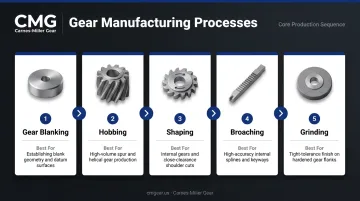
No single process produces every gear type. The right choice depends on gear geometry, required tolerance, material, and whether post-heat-treat finishing is needed.
Gear Hobbing
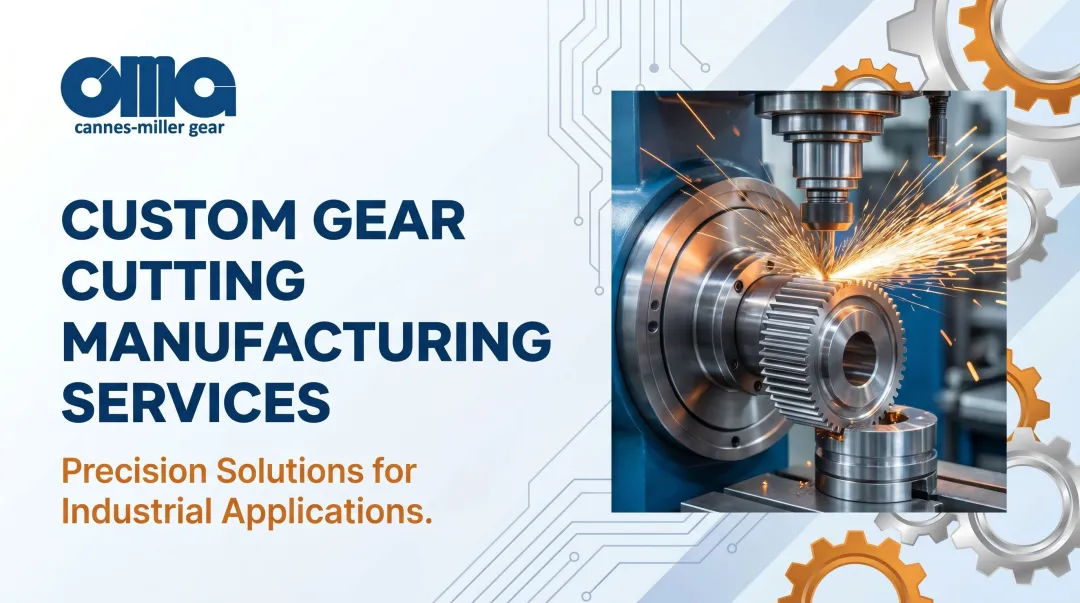
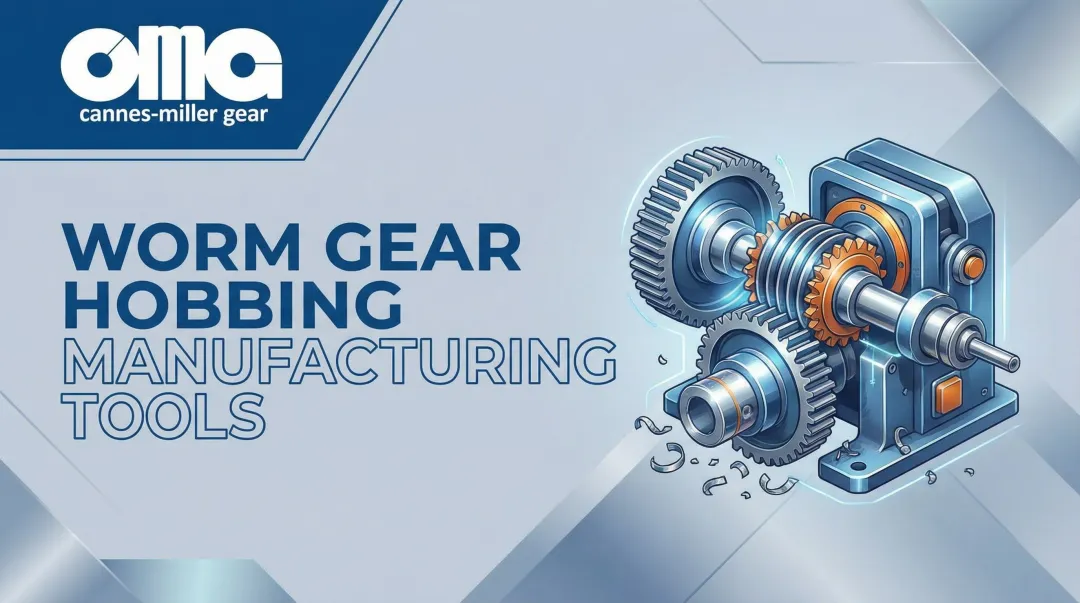
Hobbing uses a helical cutting tool—the hob—that progressively generates gear teeth in a continuous rotational process. It's the default production method for external spur gears, helical gears, and splines when volume justifies the tooling investment.
- Best for: high-volume external gears with consistent tooth profiles
- Limitations: can't reach internal gear features or gears with obstructed runout clearance
Gear Shaping
Shaping uses a reciprocating, gear-shaped cutter. It's slower than hobbing for external gears, but it's the only practical option for internal gears, cluster gears, and configurations where a hob physically can't reach.
- Best for: internal gears, blind keyways, and tight-clearance assemblies
- Trade-off: roughly 3–5x slower than hobbing for equivalent external gear work
Gear Grinding
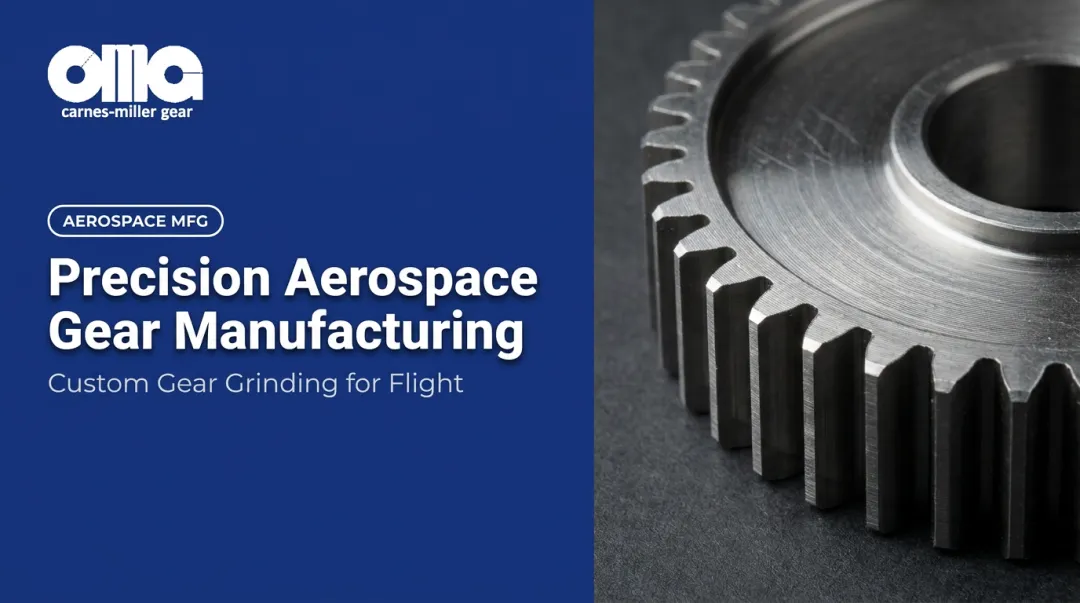
Grinding is a finishing process, not a roughing process. It removes heat-treat distortion and achieves the tightest tolerances and highest surface finish ratings available in gear manufacturing. Ground gears are standard for high-speed, low-noise, or high-load applications.
Surface finish matters more than it might seem. Research published in Gear Solutions on micropitting behavior found that superfinished gears ran 2,000 hours without micropitting, while honed gears showed damage after just 150 hours. That difference comes down to roughness profile and asperity interaction—not just cosmetics.
Carnes-Miller Gear grinds spur gears to AGMA 13, the rating that aerospace and precision-critical applications demand.
Gear Broaching
Broaching is a single-pass cutting operation used primarily for internal features—keyways, internal splines, and non-circular bores within gear blanks. It performs roughing, semi-finishing, and finishing in one tool pass, which makes it efficient for high-volume internal forms that other processes can't produce as reliably.
- Best for: high-volume internal keyways, splines, and non-circular bore profiles
- Trade-off: tooling is form-specific; not economical for low-volume or frequently changing profiles
Gear Blanking
Before any teeth are cut, the raw material must be prepared into the correct cylindrical or disc form. Blanking—typically accomplished through turning, forging, or rough machining—creates the geometry that subsequent tooth-cutting operations work from. A poorly prepared blank produces a poorly toleranced gear regardless of how precise the downstream process is.
- Best for: establishing the foundational geometry all tooth-cutting processes depend on
- Note: blanking quality directly caps the tolerance ceiling of every operation that follows
Each of these processes addresses a distinct phase or geometry constraint. Selecting the right combination—and sequencing them correctly—is where OEM gear quality is actually determined.
Quality Standards That Matter in OEM Gear Manufacturing
AGMA Quality Ratings
The American Gear Manufacturers Association quality system defines allowable tolerances for tooth spacing, profile accuracy, runout, and lead. There are two systems in circulation:
- Legacy system (ANSI/AGMA 2000-A88): Q3–Q15 scale, where higher numbers indicate tighter precision. This standard is now withdrawn/replaced but still appears on older drawings.
- Current system (ANSI/AGMA ISO 1328-1-B14): ISO-aligned, 11 tolerance classes (1–11), where lower numbers represent smaller (tighter) tolerances.
When reviewing supplier quotes or writing specifications, confirm which system applies. Mixing the two numbering conventions creates real misunderstandings about what's actually being delivered.
General industrial applications typically require mid-range quality levels; aerospace and high-speed precision applications demand the tightest classes available—achievable only through gear grinding. That connection between tolerance class and process capability runs directly through heat treatment.
Heat Treatment and Distortion Control
Hardening processes—carburizing, induction hardening, through-hardening—improve gear strength and wear resistance. They also introduce dimensional distortion. Post-heat-treat grinding is the standard method to restore geometric accuracy, which is why grinding capability is non-negotiable for gears that need both hardness and tight tolerances.
Nital-Etch Testing
Nital-etch inspection detects grinding burns—localized surface damage from excessive heat during grinding that creates micro-cracks and reduces fatigue life. Per SAE AMS2649 and ISO 14104, etch inspection applies to high-strength steel parts and is specified where drawing or customer requirements mandate it—particularly in aerospace, defense, and safety-critical applications.
Carnes-Miller Gear performs nital-etch testing in-house, which matters for customers whose drawings call it out.
Inspection Practices
Before shipment, every gear requires verification against the engineering drawing—not just visual inspection. At Carnes-Miller Gear, dimensional verification covers:
- Tooth geometry and profile accuracy
- Pitch and spacing against drawing tolerances
- Runout and lead measurements
- CMM inspection using a Mitutoyo B504B
This combination of gear analyzers and CMM equipment gives OEM customers documented confirmation that what ships matches what was specified.
Industries That Depend on OEM Gear Manufacturing Solutions
Aerospace, Defense, and Medical
These sectors demand the highest precision ratings, full material traceability, and documented compliance. Gears appear in flight control actuators, targeting systems, and surgical robotics—applications where failure has direct life-safety consequences.
Key standards that govern these customers:
- AS9100D – Quality management for aviation, space, and defense; required for most aerospace supplier approvals
- Nadcap – Accreditation for critical aerospace special processes such as heat treating and NDT
- ISO 13485:2016 – Medical device quality management systems; mandatory for surgical and implantable device supply chains
Carnes-Miller Gear serves all three sectors, with AGMA 13-rated ground gears available for precision medical and aerospace applications.
Industrial, Mining, and Construction
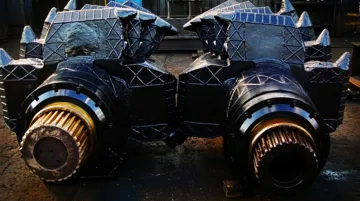
Heavy-duty equipment—crushers, conveyors, drill heads, cranes—relies on large, high-torque gears engineered to handle shock loads and abrasive operating environments. The emphasis here is on load rating, durability, and the physical capacity to manufacture larger gear diameters.
The North American gear market is estimated at $48.89B in 2025, with mining, oilfield, and construction machinery among the primary demand drivers, according to Mordor Intelligence. What OEM buyers in this segment prioritize:
- High load ratings suited to shock and impact conditions
- Material durability in abrasive or high-moisture environments
- Capacity to produce large-diameter gears (up to 400mm for grinding applications)
- Reliable lead times for both initial builds and replacement runs
Transportation and Rail
Rail gearbox applications alone exceeded $3.7B in 2023 and are projected to reach $5.9B by 2032, according to GM Insights—with helical gearboxes holding over 40% of that market. Transportation and rail applications typically require mid-range quality ratings with an emphasis on wear life and quiet operation. Long production runs and replacement parts for legacy equipment are common requirements in this segment.
What to Look for in an OEM Gear Manufacturing Partner
Full In-House Capability
A supplier who performs blanking, cutting, heat treat coordination, and grinding under one roof provides tighter process control, shorter lead times, and a single point of accountability. When critical steps are outsourced, each handoff introduces variability and schedule risk. When something goes wrong, accountability gets murky fast.
Reverse Engineering and Legacy Part Support
Original drawings get lost. Equipment gets discontinued. When a manufacturer needs replacement gears for a legacy machine with no surviving documentation, a gear supplier with reverse engineering capability—measuring the physical gear and recreating accurate manufacturing drawings—provides significant value that a simple cutting shop cannot.
Experience, Capacity, and Delivery Reliability
Gear manufacturing expertise isn't easily substituted. The equipment matters, but so does the knowledge of how to apply it across different gear types, materials, and tolerance requirements.
Carnes-Miller Gear is one example of what that looks like in practice. Operating since 1973, the company has over 50 years of continuous production across aerospace, defense, medical, mining, rail, and industrial sectors. Their 18,000-square-foot facility in Locust, NC keeps the entire process in-house:
- Hobbing, shaping, and gear cutting up to 200mm pitch diameter
- Grinding capacity up to 400mm
- Broaching and blanking without external subcontractors
For procurement teams evaluating suppliers, that combination of longevity and self-contained capability reduces both schedule risk and the coordination overhead that comes with split-source manufacturing.
Frequently Asked Questions
What does OEM gear stand for?
In gear manufacturing, OEM stands for Original Equipment Manufacturer. It refers to a company that produces custom-precision gears to a buyer's exact specifications, with those gears assembled into the buyer's finished product—machinery, vehicles, medical devices, and similar equipment.
Is OEM the same as original?
OEM parts are original in the sense that they're manufactured to the same design specifications used in the initial assembly. Aftermarket parts are produced by third parties and may not match the original tolerances, materials, or geometry—mismatches that cause premature wear, vibration, or assembly failure in precision applications.
Which is cheaper, OEM or ODM?
ODM products typically cost less upfront because the manufacturer owns the design and spreads tooling costs across multiple buyers. OEM manufacturing requires the buyer to provide the design and often involves custom tooling investment, but it delivers IP ownership and guaranteed exact-spec compliance—essential in aerospace, defense, and medical gear applications.
What manufacturing processes are used in OEM gear production?
The primary processes are hobbing, shaping, grinding, broaching, and blanking. The right combination depends on gear type, required quality rating, material, and whether post-heat-treat finishing is needed to restore geometric accuracy.
What AGMA rating should OEM gears meet?
It depends on the application. Hobbed and shaped gears typically reach AGMA 10; gear grinding pushes that to AGMA 13 on ground spur gears. High-speed, low-noise, and aerospace-grade applications almost always require the ground finish to hit those tighter tolerance classes.
Can an OEM gear manufacturer reverse engineer obsolete gears?
Yes. A qualified gear manufacturer uses CMM equipment to measure a worn or reference gear, reconstructs the engineering drawing, and produces an exact replacement. Carnes-Miller Gear has handled reverse engineering requests for legacy equipment across industrial, mining, and defense applications for over 50 years.